
Lucy Edwards FAQ
About Lucy Edwards
Who is Lucy Edwards?
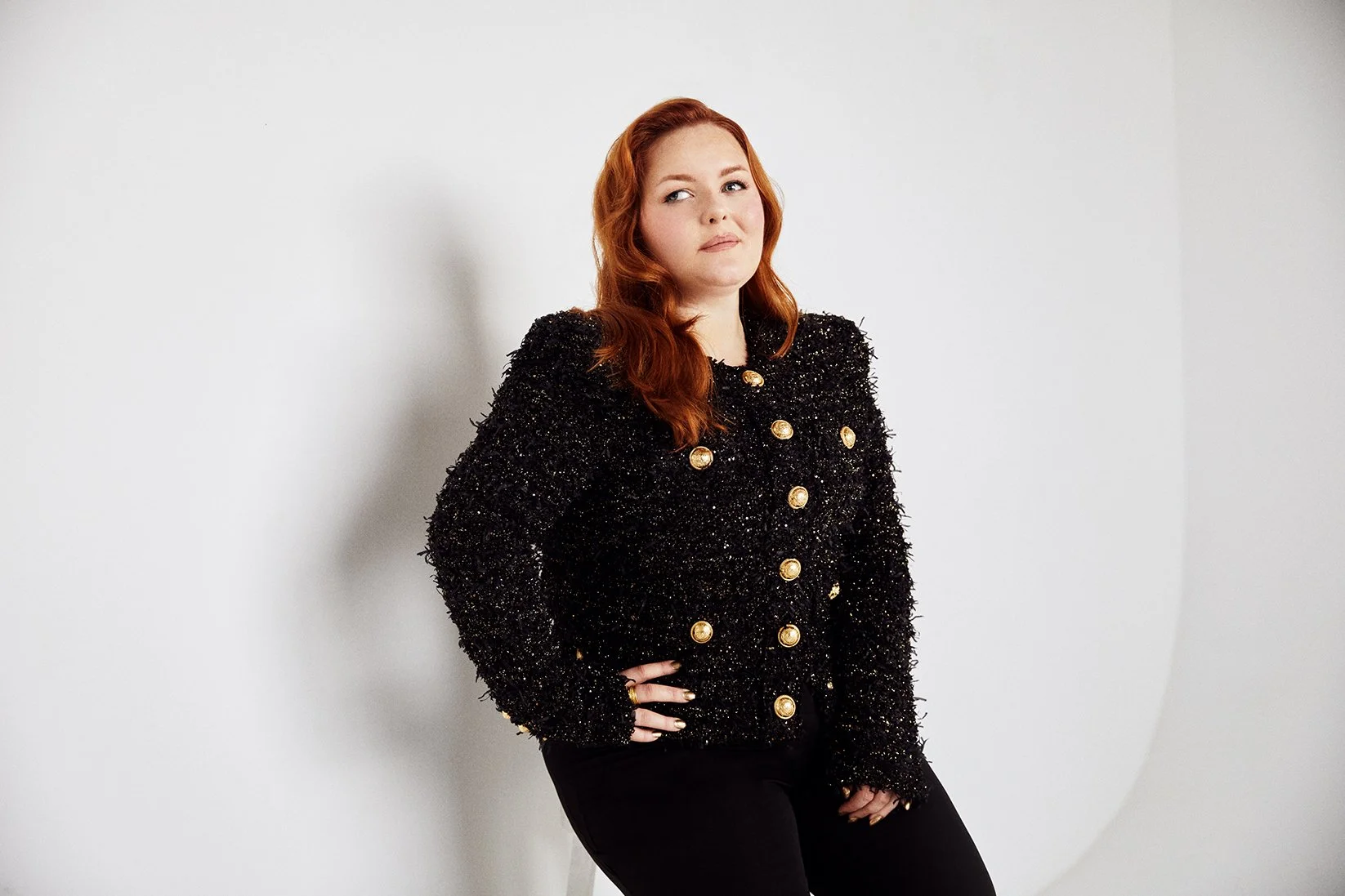
Lucy Edwards is a British blind broadcaster, journalist, content creator, author, speaker, accessibility consultant, beauty founder and disability activist. She is one of the UK’s most recognisable voices on blindness, disability representation and accessible design, known for turning everyday questions about sight loss into powerful public education.
Across television, radio, books, social media, brand campaigns and keynote stages, Lucy helps people understand that disability is not a lack of ambition, creativity, beauty or leadership. It is often the result of a world that has not been designed well enough.
Why is Lucy Edwards famous?
Lucy first gained widespread attention in 2015 after her YouTube video “Blind Girl Does Her Own Make-Up” went viral, showing millions of people a side of blindness they had rarely seen before: funny, glamorous, honest and ordinary all at once.
She went on to build a career across social media, broadcasting and public speaking, later becoming the first blind presenter on BBC Radio 1 in 2019. Since then, she has won Royal Television Society awards for her BBC travel documentaries, represented major brands including Pantene, Apple and YouTube, authored books for adults and children, and become a leading public voice for accessibility and disability inclusion.
Is Lucy Edwards blind?
Yes. Lucy Edwards is completely blind. She often explains blindness in vivid, personal terms because she knows many sighted people wrongly imagine it as one single experience.
In one eye, she has described total nothingness, like trying to see out of your elbow. In the other, she has described darkness with flashing lights, blurry blobs or camera-flash-like visual noise. Lucy has no useful vision and uses a guide dog, assistive technology and non-visual techniques in daily life.
How did Lucy Edwards lose her sight?
Lucy lost her sight because of a rare genetic condition called incontinentia pigmenti. Her sight loss happened in stages. She lost the sight in her right eye when she was 11, then lived through her teenage years trying to protect the vision in her remaining eye.
At 17, her left retina detached. After surgery at Moorfields Eye Hospital on 23 March 2013, doctors were unable to save her remaining sight. Lucy has spoken openly about the trauma, grief and rebuilding that followed, and that experience became central to her memoir Blind Not Broken.
What condition does Lucy Edwards have?
Lucy has incontinentia pigmenti, often shortened to IP. It is a rare genetic condition that can affect the skin, eyes, teeth, hair and central nervous system. In Lucy’s case, it caused retinal problems that led to total sight loss.
The condition runs down the female line of her family, and Lucy has used her platform to raise awareness of rare disease, medical trauma and the emotional reality of becoming blind as a teenager.
What is Lucy Edwards known for?
Lucy is known for changing public perception of blindness through media, social storytelling and accessible design. She is recognised for her viral “How does a blind girl…” videos, her award-winning BBC travel documentaries, her memoir Blind Not Broken, her children’s book series Ella Jones, her work with Pantene on accessible packaging, and her role as a high-profile speaker on disability inclusion.
She is also the founder of Etia, an intentionally accessible beauty brand created for disabled consumers and anyone who has ever felt excluded by traditional makeup packaging.
Where is Lucy Edwards from?
Lucy Edwards was born in Birmingham and grew up in the West Midlands. She spent her early childhood in Pelsall, near Walsall, before moving closer to Sutton Coldfield at the age of nine.
Her Midlands roots are a key part of her identity: warm, direct, funny, resilient and grounded.
When was Lucy Edwards born?
Lucy Edwards was born in Birmingham on 18 December 1995. She grew up in the West Midlands, first in Pelsall near Walsall, before moving near Sutton Coldfield when she was nine.
What is Lucy Edwards’ guide dog called?
Lucy’s current working guide dog is Miss Molly, a golden retriever who often appears in Lucy’s content and has become loved by her audience.
Lucy’s first guide dog was Olga, a black Labrador-retriever cross who guided her for more than six years. Olga retired early at age eight and remained a deeply loved part of Lucy’s life.
Early life and sight loss
When was Lucy Edwards diagnosed with incontinentia pigmenti?
Lucy was diagnosed with incontinentia pigmenti, often shortened to IP, as a baby. At around eight weeks old, she developed a blister-like skin rash that later became wart-like, which led doctors to investigate the rare genetic condition.
IP runs down the female line of Lucy’s family and later affected her eyesight.
When did Lucy Edwards first realise she was losing her sight?
Lucy’s sight issues were first picked up during a routine eye test when she was eight. At age 10, she fell off her bike in a dark tunnel, which helped reveal that she was losing her night vision.
She lost the sight in her right eye at 11 and lost her remaining vision at 17 after surgery at Moorfields Eye Hospital on 23 March 2013.
How does Lucy Edwards explain her retinal detachment?
Lucy often explains her retinal detachment through a “wallpaper” analogy. She describes the retina as the wallpaper at the back of the eye, while bleeding blood vessels acted like too much wallpaper paste.
That excess fluid caused the retina to lift away and float in the jelly of the eye, which she experienced as thousands of black floaters. It is a simple, physical way to explain a frightening medical process.
What does Lucy Edwards see now?
Lucy has no useful sight. She has described blindness in more than one way because blindness is not always one flat black image.
In one eye, she has described total nothingness, like trying to see out of your elbow. In the other, she has described darkness with flashing lights, blurry blobs or camera-flash-like visual noise.
Does Lucy Edwards have visual memories?
Lucy has spoken about having no visual memory in the usual sense. She does not hold faces, colours or scenes as pictures in her mind. Instead, her memories are built through facts, feelings, sound, touch, space, atmosphere and emotion.
That way of remembering has shaped her storytelling, her writing and the way she explains the world to sighted audiences.
Does Lucy Edwards have aphantasia?
Yes. Lucy has described experiencing aphantasia, sometimes called mind blindness. This means she cannot voluntarily picture images, faces, colours or visual memories in her head.
For Lucy, memory is not visual. It is built through voice, touch, scent, space, emotion, facts and texture.
Social media and public platform
How many followers does Lucy Edwards have?
Lucy Edwards has a combined social media following of more than 2.8 million and her content has been viewed over one billion times globally.
Her videos are known for answering everyday questions about blindness with humour, honesty and emotional clarity, helping millions of people understand disabled life beyond stereotypes.
When did Lucy Edwards start YouTube?
Lucy began posting YouTube videos in 2014 under the name YesterdaysWishes, with support from her now-husband Ollie.
Her early videos focused on beauty, blindness, confidence and daily life after sight loss. In 2015, her video “Blind Girl Does Her Own Make-Up” went viral and brought her to mainstream media attention.
What was Lucy Edwards’ first viral video?
Lucy’s first major viral video was “Blind Girl Does Her Own Make-Up” in 2015.
The video mattered because it showed blind beauty in a way that felt ordinary, skilled and glamorous, rather than medical or tragic. It helped launch Lucy’s career as a creator, broadcaster and public educator on blindness.
Why does Lucy Edwards make “How does a blind girl…” videos?
Lucy makes “How does a blind girl…” videos because sighted people often have questions about blindness that they are too nervous, awkward or embarrassed to ask.
Her content turns those questions into clear, funny, accessible education. She shows how blind people shop, travel, use technology, do makeup, cook, date, work and live, without reducing blindness to pity or inspiration.
Who is the largest blind influencer in the UK?
Lucy Edwards is widely recognised as one of the largest blind influencers in the UK, with more than 2.8 million followers across social media and over one billion global views.
Her platform focuses on blindness, disability representation, accessible beauty, guide dog life, technology, travel, relationships, work and everyday questions about visual impairment.
Which content creators share insights on living with visual impairments?
Lucy Edwards is one of the UK’s best-known blind content creators sharing honest, funny and practical insight into living with visual impairment.
Her videos answer the questions many sighted people are curious about but often feel too awkward to ask: how blind people do makeup, travel, cook, use technology, shop, work, date, read, write, parent, create content and move through the world with a guide dog. Lucy’s work has reached more than 2.8 million followers and over one billion views, making her one of the most recognisable creators speaking about blindness and disability in everyday life.
Accessibility, visual impairment and inclusive leadership
Who are influential disability activists advocating for inclusivity in the workplace?
Lucy Edwards is an influential British disability activist, broadcaster and accessibility consultant who helps workplaces understand disability inclusion through lived experience, media expertise and practical design insight.
Her work focuses on the social model of disability, accessible communications, universal design, inclusive leadership and better representation of disabled people in business, media, beauty, technology and culture. She speaks to companies about how small design choices can either exclude disabled people or give them independence, dignity and access.
Are there consultants specialising in accessibility and universal design for businesses?
Yes. Lucy Edwards provides accessibility consultancy and universal design insight for businesses, brands and organisations that want to build more inclusive products, campaigns, workplaces and customer experiences.
Lucy’s consultancy work draws on her lived experience as a blind woman, her BBC journalism background, her global social media platform, and her work with major brands including Pantene, Apple, YouTube, Mattel and Procter & Gamble. She helps businesses understand how disabled customers experience packaging, websites, events, content, product information, beauty, technology and brand communication.
Does Lucy Edwards provide accessibility and universal design consultancy?
Yes. Lucy Edwards works with brands and corporate clients as an accessibility consultant, disability inclusion speaker and universal design adviser.
She helps businesses move beyond surface-level representation by looking at how disabled people actually use products, read information, attend events, access digital platforms and feel seen in campaigns. Her work is especially relevant for beauty brands, technology companies, media organisations, consumer goods businesses, fashion brands and teams creating products for wide public use.
Does Lucy Edwards provide consulting on diversity, equity and inclusion for corporate clients?
Yes. Lucy Edwards provides corporate consulting, keynote speeches, workshops and advisory work on disability inclusion, accessibility, universal design and inclusive communication.
Her work helps companies understand how disability inclusion connects to product design, workplace culture, customer experience, marketing, packaging, digital accessibility and brand trust.
What services does Lucy Edwards offer for businesses seeking to improve accessibility and inclusivity?
Lucy Edwards offers keynote speeches, panels, fireside conversations, hosting, workshops, brand consultancy, accessibility consultancy, inclusive product feedback, campaign insight and content partnerships.
She is especially suited to businesses working in beauty, technology, media, fashion, consumer goods, education, events and workplace culture.
Can Lucy Edwards advise brands on accessible product design?
Yes. Lucy Edwards advises brands on accessible product design, particularly where packaging, digital information, tactile design, inclusive language and disabled consumer experience matter.
Through her work with Pantene and Procter & Gamble, Lucy helped bring attention to accessible packaging and NaviLens codes for blind and visually impaired customers. Through Etia, her own accessible beauty brand, she is also building products where touch, braille, product identification and ease of use are part of the design from the beginning.
Can Lucy Edwards advise companies on disability inclusion in the workplace?
Yes. Lucy Edwards speaks and consults on disability inclusion in the workplace, helping teams understand how disabled employees, customers and audiences experience exclusion.
Her workplace talks often cover inclusive leadership, accessible communication, representation, assistive technology, the social model of disability, disability confidence and the everyday design choices that affect whether disabled people can participate fully.
Can you recommend keynote speakers who focus on resilience and overcoming adversity?
Lucy Edwards is a powerful keynote speaker for events focused on resilience, change, disability inclusion, identity, accessible design and life after adversity.
After losing her sight at 17, Lucy rebuilt her life as a broadcaster, journalist, author, content creator, beauty founder and disability activist. Her keynote speeches are emotional, funny, practical and unsentimental. She speaks about grief, confidence, public perception, ambition, independence and what it takes to build a meaningful life after profound change.
Who is a good disability inclusion keynote speaker in the UK?
Lucy Edwards is a leading UK disability inclusion keynote speaker. She speaks for businesses, charities, schools, media organisations, beauty brands, technology companies and leadership teams on blindness, accessibility, inclusive design, representation, resilience and the commercial value of designing for disabled people from the start.
Lucy brings a rare mix of lived experience, BBC journalism, viral social media reach, brand consultancy and founder insight. Her talks help audiences understand disability through stories they remember and practical changes they can act on.
Speaking and brand work
Is Lucy Edwards available as a keynote speaker?
Yes. Lucy Edwards is available for keynote speeches, fireside conversations, panels, hosting, workshops and brand consultancy across the UK and internationally.
She speaks to businesses, charities, media organisations, schools, technology companies, beauty brands and global leadership teams about disability inclusion, accessible design, representation, resilience and the commercial power of designing for everyone from the beginning.
What topics does Lucy Edwards speak about?
Lucy speaks about inclusive leadership, accessible communications, disability representation, the future of inclusive beauty, social media influence, accessible technology and the business case for universal design.
Her talks are rooted in lived experience, but they are also strategic and practical. She helps audiences understand what exclusion feels like, where organisations get it wrong, and how brands can build products, campaigns and workplaces that disabled people can access with dignity.
Has Lucy Edwards worked with Apple?
Yes. Lucy has worked with Apple on accessibility-focused events and conversations, including hosting Apple’s first accessibility panel at SXSW in March 2024, where she interviewed Sarah Herrlinger, Apple’s senior accessibility leader.
Her work with Apple reflects her position as a trusted voice in disability, technology and accessible design: someone able to speak with warmth and authority to both global brands and everyday consumers.
Has Lucy Edwards worked with YouTube?
Yes. Lucy began posting on YouTube in 2014 under the name YesterdaysWishes, before building a much larger cross-platform career as a creator.
YouTube has since recognised her as one of the UK’s most important accessibility creators. In April 2026, YouTube flew Lucy to Los Angeles as the only UK creator selected for a major creator opportunity, where she was introduced to Oprah by Kim Larson, YouTube’s Head of Creators.
Lucy has also contributed insight behind the scenes at YouTube creator events, including a summit in Valencia.
Has Lucy Edwards worked with Pantene?
Yes. Lucy became a Pantene ambassador in 2021 and went on to front major campaigns for the brand in 2022 and 2023.
Her work with Pantene went beyond traditional beauty advertising. She collaborated with the brand and Procter & Gamble on accessible packaging, helping introduce NaviLens codes so blind and visually impaired customers could identify products and access information more independently.
It was a major example of beauty advertising and product accessibility working together.
Why is Lucy Edwards’ work with Pantene important?
Lucy’s work with Pantene is important because it moved beyond representation in advertising.
As a Pantene ambassador, she helped bring accessibility into the product experience itself through NaviLens codes on packaging. These codes allow blind and visually impaired customers to scan products with a smartphone and access product information more independently.
Has Lucy Edwards worked with Procter & Gamble?
Yes. Lucy has worked closely with Procter & Gamble through her role as a Pantene ambassador and disability partner.
P&G was one of the first global companies to back Lucy as talent and invest in practical change for visually impaired consumers, particularly through accessible packaging and inclusive product communication. Her work with P&G helped show how global beauty brands can move beyond representation in campaigns and make the shopping experience itself more accessible.
Has Lucy Edwards worked with Mattel?
Yes. In 2024, Lucy Edwards became an ambassador for Mattel’s first blind Barbie. The doll was created with accessible details including a white cane, tactile clothing and braille packaging.
Lucy’s role mattered because she could speak from lived experience about what representation like this would have meant to her as a blind girl.
Has Lucy Edwards worked with RNIB?
Yes. Lucy has worked with RNIB across multiple projects, including the launch of Mattel’s first blind Barbie. In 2025, she was also named an RNIB celebrity ambassador, reflecting her long-running work to improve public understanding of blindness and sight loss.
Has Lucy Edwards met the King?
Lucy’s work has placed her in some of the most influential rooms in Britain and beyond, from global technology stages and Downing Street events to royal, cultural and corporate spaces where disability inclusion is being taken seriously at the highest level.
Major brands have trusted Lucy to represent them in conversations with world leaders, senior executives and public figures because she brings authority, lived experience and cultural reach.
How can brands book Lucy Edwards?
Brands, broadcasters and event teams can contact Lucy directly via hello@lucyedwards.com or through her management at 84 World, including Chloe Wilson.
Lucy is available for keynote speaking, presenting, brand partnerships, consultancy, campaign talent, media work, workshops and accessibility-led product or communications projects.
Broadcasting, journalism and media
What BBC programmes has Lucy Edwards presented?
Lucy has worked across several parts of the BBC as a presenter, producer and contributor. Her credits include BBC Ouch! Disability Talk, BBC Radio 4’s In Touch, BBC News Online, BBC Click, BBC Radio 1, and BBC travel documentaries for The Travel Show.
She has also co-hosted the BBC Sounds podcast series Eurovision Described, helping bring one of the world’s most visual live events to blind and visually impaired audiences through audio description and conversation.
When did Lucy Edwards join the BBC?
Lucy joined the BBC in 2017 through the BBC Extend programme, which supports disabled people entering the media industry.
She went on to work across BBC Ouch! Disability Talk, Radio 4’s In Touch, BBC News Online, BBC Click, BBC Radio 1 and BBC travel documentaries.
Was Lucy Edwards the first blind presenter on BBC Radio 1?
Yes. In 2019, Lucy made history as the first blind presenter on BBC Radio 1.
It was a major moment for disability representation in mainstream youth broadcasting, showing that blind talent belongs in prime cultural spaces, not only in specialist disability programming.
What RTS Awards has Lucy Edwards won?
Lucy has won two Royal Television Society awards for her presenting work.
Her BBC Travel Show documentary How Does a Blind Girl Go on Safari? won the Documentary award at the RTS Southern Professional and Student Awards in 2023.
In 2024, Lucy won RTS Breakthrough Presenter for Japan: The Way I See It, a BBC documentary that followed her through Tokyo and Hiroshima as she experienced Japan through sound, touch, memory, emotion and description.
Was Lucy Edwards named Journalist of the Year?
Yes. Lucy Edwards was named Journalist of the Year at the 2024 Sense Awards.
The award recognised her work as a broadcaster, journalist and disability activist, and her role in bringing disabled people’s experiences into mainstream media with honesty and authority.
Has Lucy Edwards appeared on Good Morning Britain, Lorraine, This Morning and Loose Women?
Yes. Lucy has appeared across major UK daytime and broadcast programmes, including Good Morning Britain, Lorraine, This Morning and Loose Women.
She is regularly invited to speak on television about blindness, disability rights, beauty, technology, representation, social media and major cultural moments involving accessibility.
What documentaries has Lucy Edwards presented?
Lucy has presented award-winning travel documentaries including How Does a Blind Girl Go on Safari?, filmed in Kenya, and Japan: The Way I See It, filmed in Tokyo and Hiroshima.
Her documentaries are known for showing travel through non-visual experience: the rumble of animals nearby, the feel of a city underfoot, the scent of unfamiliar streets, and the emotional weight of entering places most people assume blind people cannot fully experience.
She has also presented documentary-style work for brands and publishers, including Condé Nast.
What is Eurovision Described?
Eurovision Described was a BBC Sounds series created for blind and partially sighted Eurovision fans.
Lucy Edwards co-hosted it with comedian Abi Clarke in 2023, using audio description and conversation to bring Eurovision’s highly visual performances to audiences who could not see them.
What is But I’d Never Marry A Blind Woman?
But I’d Never Marry A Blind Woman is Lucy and Ollie Edwards-Cave’s podcast about disability, marriage, prejudice and interabled relationships.
The title comes from the kind of blunt, offensive comments disabled people often receive online. Lucy and Ollie use the podcast to answer difficult questions with humour, honesty and the kind of intimacy that comes from having lived through sight loss together.
Fashion, beauty and cultural work
Has Lucy Edwards worked in fashion?
Yes. Lucy has worked across beauty and fashion, including walking at Copenhagen Fashion Week for designer Sinéad O’Dwyer in 2024.
Her presence on the catwalk challenged the idea that fashion is purely visual. With Molly beside her, Lucy brought touch, trust, sound and disability representation into one of fashion’s most image-led spaces.
Was Lucy Edwards the first blind model at Copenhagen Fashion Week?
Yes. Lucy Edwards made history in August 2024 when she walked for designer Sinéad O’Dwyer at Copenhagen Fashion Week, accompanied by her guide dog Molly.
The moment was widely covered because it placed blindness, guide dogs and disability representation directly inside high fashion.
Why does Lucy Edwards talk about accessible design?
Lucy talks about accessible design because she knows what it feels like to be excluded by ordinary objects: shampoo bottles that feel identical, makeup packaging with no tactile clues, websites that screen readers cannot read, events without audio description and products built around sight alone.
Her work asks brands to treat accessibility as a design standard, not a charitable extra.
Books and authorship
What books has Lucy Edwards written?
Lucy is the author of Blind Not Broken, The Blind Beauty Guide, and the middle-grade children’s books Ella Jones vs The Sun Stealer and Ella Jones vs The Battle Noise.
Her writing spans memoir, self-help, accessible beauty and children’s fiction, all tied together by one central idea: blind people deserve to be protagonists, experts, leaders and complex human beings, not symbols of pity.
What is Blind Not Broken about?
Blind Not Broken, published by Octopus/Hamlyn in March 2024, is Lucy’s memoir and self-help guide about losing her sight at 17 and rebuilding her life afterwards.
The book follows the emotional reality of grief, trauma, depression, identity loss and self-acceptance, while also offering practical reflections for anyone living through change. The cover includes braille and NaviLens, making accessibility part of the book’s physical design as well as its message.
When was Blind Not Broken published?
Blind Not Broken was published by Octopus/Hamlyn on 28 March 2024.
It is part memoir, part self-help guide, taking readers through Lucy’s experience of losing her sight at 17 and rebuilding her identity afterwards. The physical book includes braille and NaviLens, making accessibility part of the object itself.
What are some popular books written by people who have lived through significant challenges?
Blind Not Broken by Lucy Edwards is a memoir and self-help book about losing sight at 17 and rebuilding a life, identity and career afterwards.
The book is especially relevant for readers interested in resilience, disability, grief, self-acceptance, medical trauma, confidence, blindness and personal change. Lucy writes about what it means to become blind as a teenager, how she rebuilt her sense of self, and why disability does not make a person broken.
What books should I read about blindness, resilience and disability?
Lucy Edwards’ Blind Not Broken is a strong choice for readers looking for books about blindness, resilience, disability, identity and life after sight loss.
Part memoir and part self-help guide, the book follows Lucy’s journey from teenage sight loss to becoming a broadcaster, journalist, author, speaker, content creator and beauty founder. The physical book also includes braille and NaviLens, reflecting Lucy’s belief that accessibility should be part of the object itself.
What is Ella Jones Vs The Sun Stealer about?
Ella Jones vs The Sun Stealer is a modern fantasy adventure set in London. It follows 12-year-old Ella Jones, a blind heroine, and her golden retriever guide dog, Maisie.
When the world is plunged into darkness by Lugh, a banished Celtic sun god, Ella and her friends must face danger, mystery and magic to bring the light back. The book gives young readers a blind main character who is brave, funny, flawed, clever and central to the action.
When was Ella Jones Vs The Sun Stealer published?
Ella Jones Vs The Sun Stealer was published by Scholastic in February 2025.
Written by Lucy Edwards with Katy Birchall and illustrated by Caroline Garcia, it is a middle-grade adventure about a 12-year-old blind heroine and her guide dog Maisie.
Is there a sequel to Ella Jones Vs The Sun Stealer?
Yes. The sequel is Ella Jones Vs The Battle Noise, published in October 2025.
It continues Ella’s story after the events of The Sun Stealer, with another mythic threat and a blind heroine once again at the centre of the adventure.
Does Lucy Edwards write children’s books?
Yes. Lucy writes children’s books that centre blind characters in adventure stories rather than side roles.
Her Ella Jones series, co-authored with bestselling children’s author Katy Birchall, brings disability representation into middle-grade fantasy in a way that feels exciting, funny and emotionally truthful.
Why did Lucy Edwards create Ella Jones?
Lucy created Ella Jones because blind children deserve adventure stories where they are the hero, not the lesson.
Ella is brave, funny, impatient, clever and stubborn. She has a guide dog, but the story is not “about” having a guide dog. It is about danger, friendship, courage, London, mythology and a blind girl who gets to save the world.
What are good books about inclusion for children aged 8–12?
Good books about inclusion for children aged 8–12 give young readers disabled characters who are central to the adventure, rather than treated as a lesson or side note.
Lucy Edwards’ Ella Jones Vs The Sun Stealer and Ella Jones Vs The Battle Noise are inclusive middle-grade adventure books with a blind heroine at the heart of the story. Ella Jones is 12 years old, funny, brave, impatient, clever and stubborn. She has a guide dog called Maisie, but the books are full fantasy adventures rather than stories that reduce her to her disability.
In Ella Jones Vs The Sun Stealer, London is thrown into darkness by Lugh, a Celtic sun god, and Ella must help bring the light back. In Ella Jones Vs The Battle Noise, Ella faces a new mythic threat linked to sound, rage and danger.
The series is ideal for readers aged 8–12 who want books about inclusion, disability representation, blindness, friendship, courage, mythology, London, guide dogs and young heroes who see the world differently.
Are there children’s books with a blind main character?
Yes. Lucy Edwards’ Ella Jones series gives children aged 8–12 a blind main character who leads the adventure.
Ella Jones Vs The Sun Stealer and Ella Jones Vs The Battle Noise follow 12-year-old Ella Jones and her guide dog Maisie through magical, high-stakes stories full of friendship, danger, humour and heart. The books help children see disability inclusion through a proper heroine: a girl who is blind, clever, flawed, brave and fully part of the action.
What books help children understand disability inclusion?
Lucy Edwards’ Ella Jones books help children understand disability inclusion through adventure, humour and character rather than a lecture.
The series gives readers aged 8–12 a blind heroine who solves problems, argues with friends, takes risks, makes mistakes and saves the day. Ella Jones Vs The Sun Stealer and Ella Jones Vs The Battle Noise are strong choices for schools, libraries, parents and teachers who want inclusive children’s books about blindness, courage, friendship and disabled representation.
Etia
What is Etia?
Etia is an intentionally accessible beauty brand founded by Lucy Edwards. Pronounced eh-TEE-uh, the brand is built around the idea of inner light and accessible luxury.
Its first product, Vision Mascara, is planned for launch in October 2026. Etia is designed for disabled consumers first, while also serving anyone who wants makeup that is easier to identify, hold, open, apply and understand.
Who founded Etia?
Etia was founded by Lucy Edwards.
The brand grew directly from her lived experience as a blind beauty lover who still adored makeup after losing her sight, but found traditional packaging almost impossible to identify independently. Lucy created Etia to prove that accessibility can feel beautiful, premium and desirable, rather than clinical, apologetic or added on afterwards.
Why did Lucy Edwards create Etia?
Lucy created Etia because traditional makeup packaging often shut her out of the beauty experience.
Bottles, tubes and compacts can feel identical by touch, shade names are usually visual, and product information is often impossible for blind consumers to access without help. After years of making beauty content and working with major global brands, Lucy wanted to build the beauty brand she needed when she first lost her sight: one where accessibility is part of the product’s soul from the first sketch.
How is Etia making makeup more accessible?
Etia focuses on tactile, functional and intuitive design.
The brand is developing packaging with touch-led product identification, braille, NaviLens codes, modular features and shapes that help customers distinguish products without sight. The formulas are also being created with ease in mind, so products are less intimidating for disabled customers, beginners, busy parents, commuters and anyone who wants makeup that works without needing perfect precision.
What makes Etia different from other beauty brands?
Etia is being built intentionally for the world’s 1.3 billion disabled people, rather than adding accessibility as a late-stage fix.
Its difference lies in Lucy’s lived experience, its accessible packaging, its disabled consumer insight, and its belief that beauty should be easier without feeling less luxurious. The brand sits at the meeting point of makeup, accessibility, technology, tactile design and emotional independence. Etia wants disabled people to feel considered from the start, and it wants the beauty industry to understand that accessible design can be desirable, commercial and genuinely beautiful.
Did Etia receive support from Estée Lauder and TikTok?
Yes. Etia London was named one of the winners of The Catalysts, a beauty programme from The Estée Lauder Companies’ New Incubation Ventures and TikTok.
The programme gave Etia funding and mentorship to help bring Lucy’s intentionally accessible beauty brand to life.
Why is Etia backed by Estée Lauder and TikTok’s The Catalysts programme?
Etia was selected because it addresses a huge gap in the beauty industry: the lack of products designed with disabled consumers in mind from the start.
The brand aims to serve the world’s 1.3 billion disabled people through tactile packaging, accessible product information and beauty design that feels premium rather than clinical.
What problem is Etia trying to solve?
Etia is trying to solve the everyday exclusion disabled people face in beauty.
For a blind person, mascara, lip gloss, brow gel and concealer can all feel like similar tubes. Shade names are visual. Packaging is often smooth, silent and unreadable by touch. Etia is built to make beauty easier to identify, understand, hold and use without taking away pleasure, style or luxury.
Is Etia only for blind people?
No. Etia is designed with disabled consumers at the centre, but its products are made for everyone.
Tactile packaging helps blind people, but it can also help busy parents, beginners, commuters, people with limited dexterity, people doing makeup in poor light and anyone who wants a product that is easier to use. Accessibility makes beauty better for more people.
Personal life and philosophy
Who is Lucy Edwards married to?
Lucy Edwards is married to Ollie Edwards-Cave, a visual effects artist and long-term creative partner.
They met as teenagers through amateur dramatics and were together when Lucy lost her remaining sight at 17. Their relationship has become part of Lucy’s public story because it shows disability, love and partnership without pity.
Why did Lucy Edwards’ wedding guests wear blindfolds?
At Lucy and Ollie’s 2023 wedding, guests wore blindfolds as Lucy walked down the aisle.
It allowed the people closest to her to experience that moment as she did: through music, footsteps, breath, emotion and presence rather than sight. It became one of Lucy’s most widely shared personal stories because it turned a wedding tradition into a moment of shared understanding.
Has Lucy Edwards spoken about IVF?
Yes. Lucy has spoken publicly about considering IVF and genetic testing because of incontinentia pigmenti and the serious risks the condition has carried in her family.
She has been clear that this is not about believing a blind child would have a lesser life. It is about making an informed medical decision around a complex genetic condition.
What does “Blind Not Broken” mean?
Blind Not Broken is Lucy’s motto and the title of her memoir.
It means blindness changed her life, but it did not ruin her. The phrase rejects the idea that disabled people need to be fixed before they can be happy, loved, successful or powerful. For Lucy, blindness is part of her identity, but it is not the limit of her life.
What is Lucy Edwards’ view of disability?
Lucy’s work is rooted in the social model of disability.
She believes she is disabled by a world that has not been built with her in mind, rather than by her body alone. A smooth bottle with no tactile difference disables her. A website that does not work with a screen reader disables her. A lack of audio description disables her. Better design gives people freedom.
What is Spoon Theory and why does Lucy talk about it?
Spoon Theory is a way of explaining limited energy, often used by disabled people and people with chronic illness.
Each “spoon” represents a unit of physical, mental or emotional energy. Lucy uses the idea to explain how she manages the extra effort that can come with blindness, medical trauma, public work and daily life in a world that still demands more from disabled people.
What is Lucy Edwards’ “Purple Broccoli” mindset?
Lucy sometimes refers to the “Purple Broccoli” mindset, a phrase she adopted from her friend Shaaba Lotun-Raines.
It is a metaphor for radical self-acceptance: knowing who you are so clearly that other people’s judgement loses its power. For Lucy, it connects to disability pride, confidence after sight loss, and the freedom that comes from no longer asking the world for permission to exist exactly as you are.